Nanjing University of Chinese Medicine unveils Sino-New Zealand health college in Taizhou
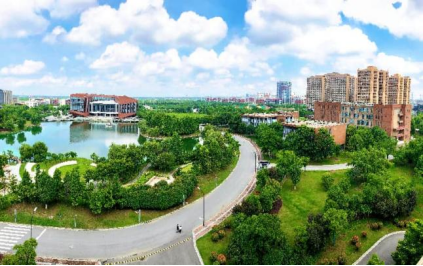
Nanjing University of Chinese Medicine. [Photo/WeChat account: njucmzsb]
Nanjing University of Chinese Medicine has introduced its first Sino-foreign institution, the Otago Smart Health College, at a campus open day for prospective students and their families, marking the college's public debut following its official approval.
Located at the university's Taizhou campus in China Medical City, the new college will begin enrolling students this year with a planned capacity of 1,200 students.

The University of Otago. [Photo/WeChat account: njucmzsb]
The college was jointly established by NJUCM and the University of Otago. Founded in 1869, the University of Otago is the second most prestigious and one of the oldest universities in New Zealand. It is internationally recognized for its medicine, health sciences and biotechnology programs. NJUCM, meanwhile, brings strong expertise in traditional Chinese medicine, pharmacy and clinical medicine to the partnership.
The college will initially offer two undergraduate programs: pharmacy and medical information engineering.
Students will complete the first three years of study at NJUCM before spending their fourth year at the University of Otago. Upon successful completion of the program, graduates will receive bachelor's degree certificates from NJUCM. Pharmacy students will also earn a Bachelor of Science in Pharmacology from the University of Otago, while medical information engineering students will receive a Bachelor of Science in Data Science from the New Zealand university.
According to Zhang Li, executive dean of the Otago Smart Health College, the college will strengthen collaboration with leading pharmaceutical and medical device companies in the Taizhou Medical High-Tech Zone. Industry experts and research directors from partner companies will serve as part-time mentors, while the college and enterprises will jointly establish high-standard training bases.

 Jiangsu Universities Driving Progress in BRI Cooperation
